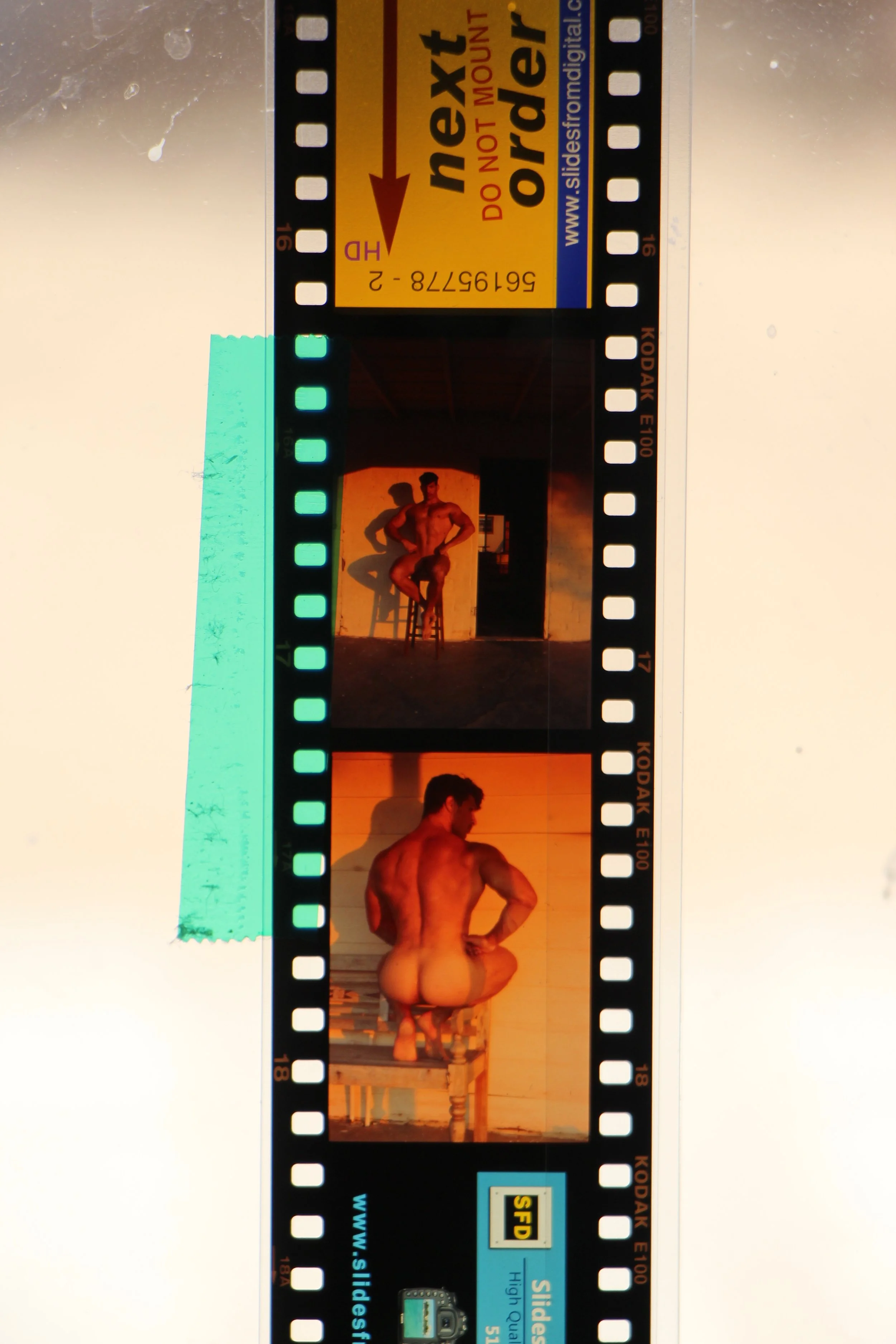
Shamu Azizam [ muzizmu ] is a visual ghost behind the lens, turning the camera on himself in half-light. His portraits flicker like memories of someone else’s desire, found between the curled pages of forgotten magazines, their colors gone to yellow and bruise. Rooted in a rural upbringing shaped by religious tradition, his self-portraits fold ritual into spectacle, faith into flesh. The camera becomes a confessional, the body a relic pressed flat by time and expectation. Masculinity appears not as power, but as residue — a myth learned early and carried long after belief has thinned. These images linger like hymns half-remembered, offering no redemption, only witness, only the quiet persistence of desire beneath the weight of American inheritance.